
How to Stop Using Credit Cards While Paying Them Off (Without Going Cash-Only)
The hardest part of paying off credit card debt isn't making the monthly payment—it's stopping the leak.
Many people enter an exhausting cycle: they make a $500 debt payment on the 1st of the month, run short on checking cash by the 20th, and use the exact same credit card to buy groceries and gas. By the end of the month, they've added $450 back onto the card, leaving them with a net progress of just $50.
To break the cycle, you must stop putting new transactions on the cards you are trying to pay off. But in a digital world, switching entirely to physical cash envelopes is clunky and impractical. Here is how to transition off credit card spending smoothly using modern checking structures and friction tactics.
1. Build the 'Buffer Checking Account' System
The primary reason people revert to credit cards mid-month is cash-flow volatility. When bills hit checking at unpredictable times, your available balance dips, forcing you onto a credit card.
Instead of relying on a single checking account, set up a simple two-account system:
Account A (Bills & Debt Payoff): Your paycheck deposits here. All fixed expenses (rent/mortgage, utilities, minimum debt payments, automated savings) are auto-paid directly out of this account.
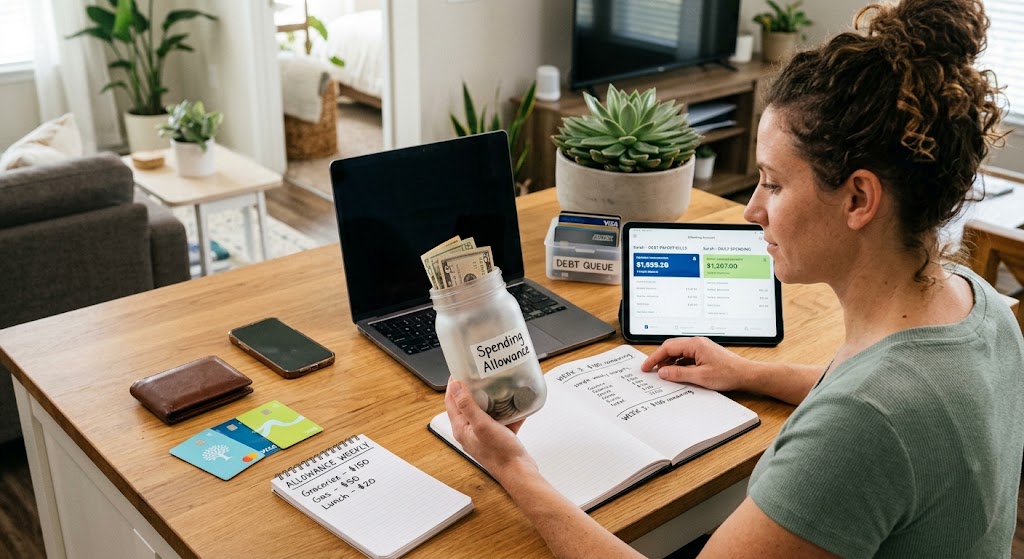
Account B (Daily Spending Buffer): Every week or payday, transfer a set, realistic allowance into this debit account for variable spending (groceries, gas, dining, personal care).
By keeping fixed bills isolated from daily spending, you never run the risk of draining your rent money on groceries or being forced to charge a gas fill-up to a credit card.
2. De-Trash Your Digital Wallet and Browser Autofill
Modern e-commerce is engineered to make spending effortless. One-click checkouts eliminate the pause between 'I want this' and 'I bought this.'
To protect your payoff momentum, add deliberate friction back into your buying process:
Remove Saved Cards from Browsers: Clear auto-saved credit card details from Chrome, Safari, and shopping portals like Amazon, Target, and eBay.
Delete Cards from Mobile Wallets: Remove card profiles from Apple Pay, Google Pay, and food delivery apps.
Enforce the 24-Hour Card Retrieve Rule: If buying something online requires standing up, walking across the house, and physically typing in 16 debit card digits, over 50% of impulse purchases will be abandoned naturally.
3. Handling Unexpected Daily Expenses Without Reverting to Credit
What happens when an unexpected expense—a $150 prescription, a flat tire, or a mandatory school activity—pops up mid-month?
If you don't have cash set aside, that charge instantly lands back on a credit card. Before throwing every spare dollar at your credit balance, establish a $1,000 Starter Emergency Buffer in a high-yield savings account.
Having an explicit cash buffer keeps unexpected daily bumps from resetting your credit card balances back to zero.
Catch Budget Leakage Before It Happens
Stopping credit card usage starts with knowing your exact monthly baseline spending.
👉 Set Up Your Baseline Budget Tracker on Cut The Card – Input your fixed costs and daily allowance targets to catch budget leakage early and keep your payoff trajectory on track!
Enjoyed this post? Never miss an update!