The High Cost of Convenience: How Buy Now, Pay Later (BNPL) Feeds Card Debt
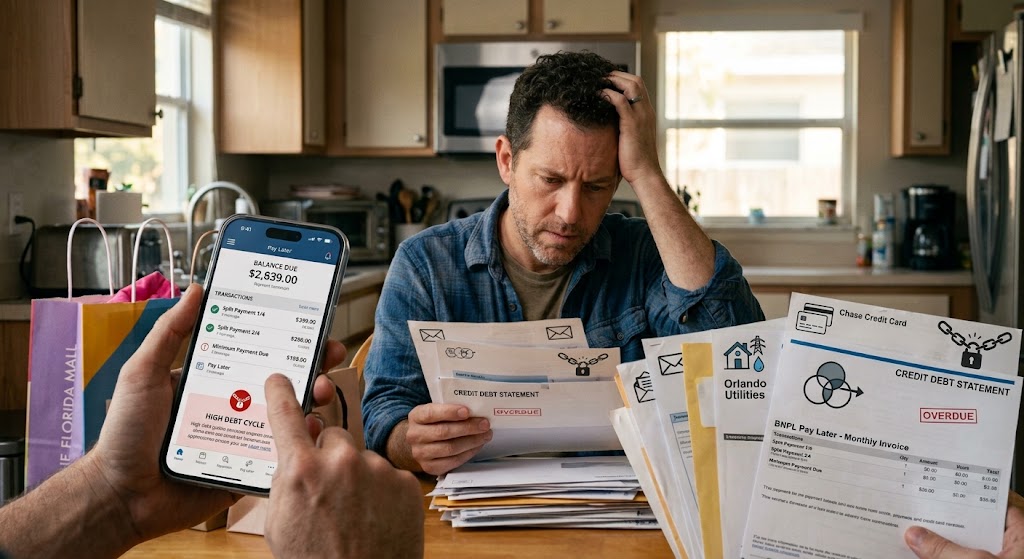
You've probably seen the offer while shopping online: “Buy now, pay later. Four easy payments.”
A $200 purchase suddenly feels like just $50. No large upfront expense, and sometimes no interest. What's not to like?
Buy Now, Pay Later (BNPL) services can be convenient, but they also create financial obligations that are easy to underestimate. If you're already working to eliminate credit card debt, those small payments could make your journey more difficult.
The good news? Understanding how BNPL works can help you enjoy greater control over your spending without sacrificing your financial goals.
What Is Buy Now, Pay Later?
BNPL allows consumers to divide purchases into smaller payments instead of paying the full amount immediately.
Many popular plans split purchases into four installments, often over six weeks. Some charge no interest when payments are made according to the agreement, while longer-term financing plans may include interest.
For example, a $200 purchase might require:
$50 at checkout.
$50 two weeks later.
$50 after four weeks.
$50 after six weeks.
The total is still $200. You're simply spreading the cost across several payments.
The challenge begins when multiple purchases overlap.
The Hidden Budget Problem: Small Payments Add Up
Imagine you've used BNPL for several purchases:
Purchase |
Total Cost |
Payment Every Two Weeks |
|---|---|---|
Clothing |
$160 |
$40 |
Electronics |
$240 |
$60 |
Household items |
$120 |
$30 |
Shoes |
$200 |
$50 |
Total |
$720 |
$180 |
Suddenly, you're responsible for $180 every two weeks during the overlapping payment periods.
That's $360 across two payments, money that could otherwise help cover expenses, build savings, or reduce your credit card balances.
Each purchase may have seemed manageable individually. Together, however, they can place considerable pressure on your budget.
Affordable installments don't necessarily mean an affordable purchase.
How BNPL Can Contribute to Credit Card Debt
BNPL doesn't automatically create credit card debt. The problem develops when installment payments compete with existing financial obligations.
Consider someone who has $4,000 in credit card debt and plans to pay $300 monthly.
After taking on several BNPL purchases, they discover that $150 of their monthly budget must now cover installment payments.
If they reduce their credit card payment from $300 to $150, their debt payoff slows, assuming they still meet the required minimum payment.
At a 25% APR, a $4,000 card balance generates approximately $83 in interest over a 30-day period if the balance remains unchanged, using a simplified daily-interest calculation.
With less money available for repayment, more of the outstanding balance continues generating interest.
Some consumers may also turn to credit cards for everyday expenses when installment payments leave their checking accounts short.
This is how seemingly harmless purchases can indirectly contribute to a growing debt problem.
Is Interest-Free BNPL Really Free?
Many short-term BNPL plans genuinely offer zero interest when used according to their terms. That's an important distinction.
However, depending on the provider and agreement, potential costs can include:
Late fees or other consequences for missed payments.
Interest charges on certain longer-term financing plans.
Bank overdraft fees if automatic payments exceed available funds.
Additional credit card interest if BNPL commitments lead you to finance other expenses.
Not every provider charges the same fees, and some prohibit using credit cards for installment repayments.
Always review the agreement before accepting an offer.
Why BNPL Can Encourage Overspending
One reason BNPL is appealing is that it shifts attention from the total purchase price to the size of each installment.
A $400 purchase may feel expensive. Four payments of $100 can feel more manageable, even though the overall cost hasn't changed.
This doesn't mean BNPL is always a poor financial choice. It can be useful for planned purchases when the full amount fits comfortably within your budget.
The risk comes from treating future payments as though they don't count toward today's spending decisions.
Before selecting BNPL, ask yourself: Would I still buy this item if I had to pay the entire amount today?
That simple question can help separate necessary purchases from impulse spending.
Five Ways to Keep BNPL From Derailing Your Debt Payoff
1. Track every installment. Record the remaining balance, payment amount, and due date for each plan.
2. Look at your total commitments. Don't evaluate a new purchase in isolation. Add together all upcoming installment payments.
3. Protect your credit card payoff budget. Avoid taking on BNPL obligations that force you to reduce planned debt payments.
4. Avoid stacking purchases. Consider finishing one installment plan before starting another.
5. Prioritize financial stability. If your budget is already stretched, waiting and saving for a purchase may be the better choice.
Convenience Shouldn't Cost You Financial Freedom
BNPL isn't automatically good or bad. It's another financial tool, and its impact depends on how you use it.
When you're working to become debt-free, the important question isn't whether you can afford the next installment. It's whether the entire purchase fits into your financial plan.
You deserve to enjoy your money without feeling overwhelmed by payments.
Every thoughtful spending decision helps protect the progress you've already made. Stay focused on your goals. You can do this!
See How Your Spending Decisions Affect Your Debt-Free Journey
Understanding where your money goes is an important step toward eliminating debt.
Explore the free debt planning tools at CutTheCard.net and discover how you can save money and time while building a realistic path toward financial freedom.
Disclaimer: This article is for educational purposes only and does not constitute personalized financial advice. BNPL terms, fees, repayment methods, and credit reporting practices vary by provider and agreement.
👉 Start Your Debt Payoff Plan Today – Download our free Cut The Card workbook and calculation templates to accelerate your journey to $0 balances.
Enjoyed this post? Never miss an update!