
Medical Debt vs. Credit Card Debt: Why You Should Never Put Doctor Bills on a Credit Card
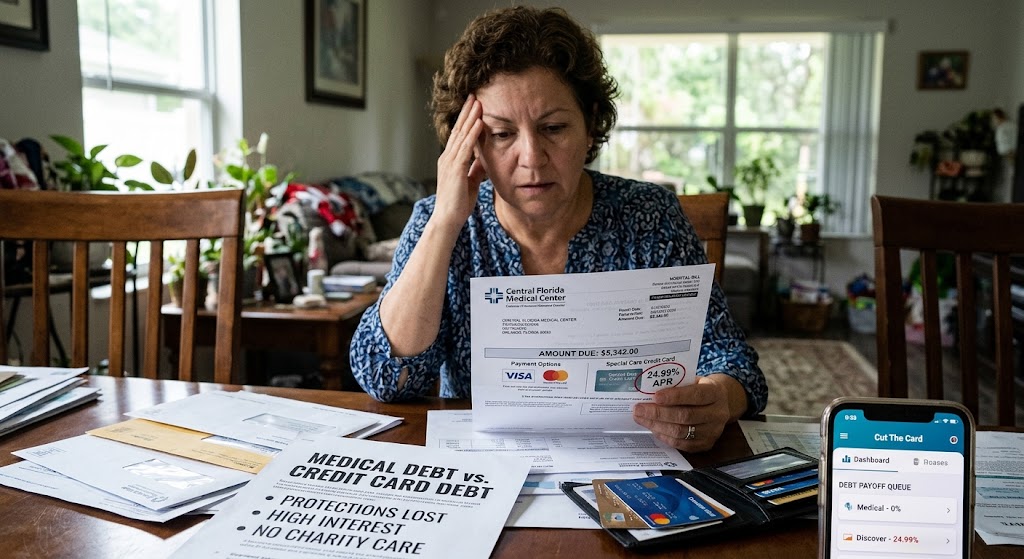
When an unexpected medical bill arrives in the mail—whether it's $800 for an ER visit or $5,000 for a hospital procedure—the pressure to resolve it immediately is intense.
Hospitals and clinics often include payment slips suggesting you pay with Visa, Mastercard, or specialized healthcare credit cards. Put off by collection warnings, millions of people swipe their credit cards to clear doctor bills.
This is one of the most expensive financial mistakes you can make. Putting medical debt on a credit card instantly transforms zero-interest, negotiable medical debt into high-interest, non-negotiable credit card debt.
Why Medical Debt Is Radically Different Than Credit Card Debt
1. Federal & Credit Reporting Protections: Under recent federal credit bureau policy changes, paid medical debt is removed from credit reports entirely. Furthermore, unpaid medical debt under $500 is not reported on credit reports at all, and unpaid medical bills over $500 cannot appear on credit reports until 1 full year has passed.
2. Interest Rates: Medical providers generally do not charge interest on outstanding bills or offer 0% interest monthly payment plans. Credit cards charge 20% to 30% APR compounding daily.
3. Negotiability & Charity Care: Non-profit hospitals are legally required to offer Financial Assistance (Charity Care) policies. Bills can often be reduced by 50% to 100% based on income. Once you pay with a credit card, the hospital is paid in full and you lose all rights to charity care or billing audits.
The 4-Step Medical Debt Action Plan
Step 1: Request an Itemized Bill: Never pay a summary invoice. Request an itemized bill with CPT billing codes. Review it for duplicate charges, unreceived services, or coding errors.
Step 2: Apply for Charity Care / Financial Assistance: Ask the hospital billing department for their financial assistance application. Many hospitals approve partial or full relief for households earning up to 300% or 400% of the federal poverty line.
Step 3: Negotiate the Total Balance: Call the billing department and offer a lump-sum settlement (e.g., 'I can pay 50% today if you settle the balance') or request a interest-free 24-month payment plan directly with the provider.
Step 4: Keep Medical Debt Off Credit Cards: Even if you can only afford $25 a month, keep the debt with the healthcare provider on an agreed plan rather than transferring it to a card.
Audit Your Debt Payoff Queue
Keep medical bills out of your revolving debt calculations and focus your cash on high-APR cards.
👉 Audit Your Debt Profiles on Cut The Card – Separate consumer credit cards from direct provider payment plans to ensure your Avalanche strategy attacks high-interest accounts first!
Enjoyed this post? Never miss an update!