
How to Break the Payday Loan Rollover Trap (Without Borrowing More)
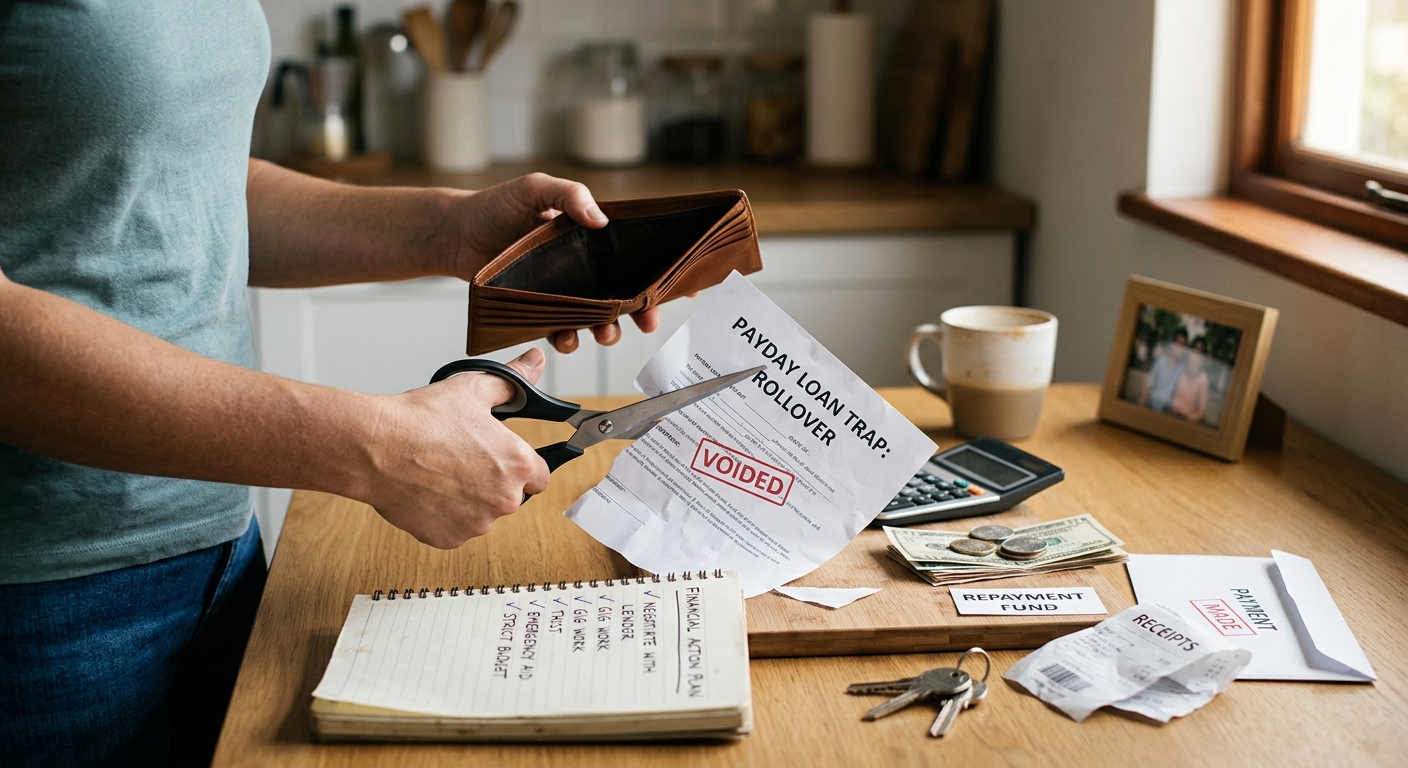
When your payday loan due date hits on Friday and your checking account is sitting at $14, clicking "rollover" feels like the only lifeline left. That $60 or $80 fee buys you two more weeks of breathing room, but it doesn't touch what you actually owe.
Before you know it, you’ve paid the original loan amount twice over in fees, and the principal balance hasn't budged an inch.
Getting caught in this loop is suffocating. You are working harder just to stay in the exact same spot. But breaking the cycle doesn’t mean you have to dig yourself deeper into debt—it means changing how you handle the next move.
1. Call and Ask for a Hardship Plan (The Negotiation Tactic)
Most people assume payday lenders won't work with them, so they just use the online portal to roll the loan over.
Instead of doing that, pick up the phone. Many lenders are bound by state regulations or internal policies that allow for Extended Payment Plans (EPPs) or hardship arrangements.
- What to say: Ask directly, "I cannot afford the rollover fee and the principal right now. What is your process for a structured repayment plan without additional fees?"
- Why it works: Lenders often prefer getting a steady, lower-amount payment over time rather than dealing with defaults. It’s an uncomfortable call, but it can stop the fee bleeding immediately.
2. Find "Immediate Liquidity" Without Interest (The Asset & Gig Pivot)
When traditional cash flow dries up, you have to look for zero-interest cash fast. That means looking around your house or shifting your schedule temporarily.
- Micro-liquidation: Look for high-value items sitting in your closet, garage, or drawers (electronics, tools, musical instruments) that you can sell quickly on Facebook Marketplace or at a local shop for cash today.
- Immediate-payout gig work: Take on a couple of shifts through platforms that offer instant cash-out options for delivery, ridesharing, or local odd jobs. The goal isn't a new career—it's making the exact amount needed to clear this single balance so you never have to roll it over again.
3. Check for Credit Union PALs and Local Help
If you find yourself relying on short-term loans repeatedly, the issue is structural, not just a one-off emergency.
- Payday Alternative Loans (PALs): Many local credit unions offer small, low-cost loans specifically designed to bail people out of predatory payday debt. Their interest rates are a fraction of what payday lenders charge, and they give you months—not weeks—to pay them back.
- Community Aid: Check with local non-profits, churches, or community action agencies. Many have emergency funds set aside specifically to help families cover utilities, car repairs, or groceries so they don't have to turn to high-interest loans.
4. Run a Brutal Expense Triage for 30 Days
When you're in a liquidity crisis, casual budgeting goes out the window. You need financial triage.
Divide every expense for the upcoming month into two categories: Survival (rent, electricity, basic groceries, essential meds) and Everything Else (subscriptions, dining out, entertainment, non-essential shopping).
Aggressively pause or cut the "everything else" category for just one month. Redirect every single freed-up dollar directly toward paying down that payday loan principal.
Moving Forward
Escaping a payday loan trap is tough, and the first step requires resisting the easy, tempting trap of another rollover.
The momentum you build by paying off your very first loan entirely on your own terms is the foundation of your financial reset. It won't happen overnight, but every dollar you keep out of a lender's hands is a dollar that stays where it belongs: with you.
Disclaimer: This article is provided for educational purposes only and does not constitute professional financial, legal, or tax advice. Please consult with a qualified professional regarding your specific financial situation.
Stop the cycle before it starts. Use CutTheCard services to implement structured debt strategies and reclaim your financial autonomy.
Enjoyed this post? Never miss an update!