

How to Inventory and Consolidate Your Buy Now, Pay Later Payments
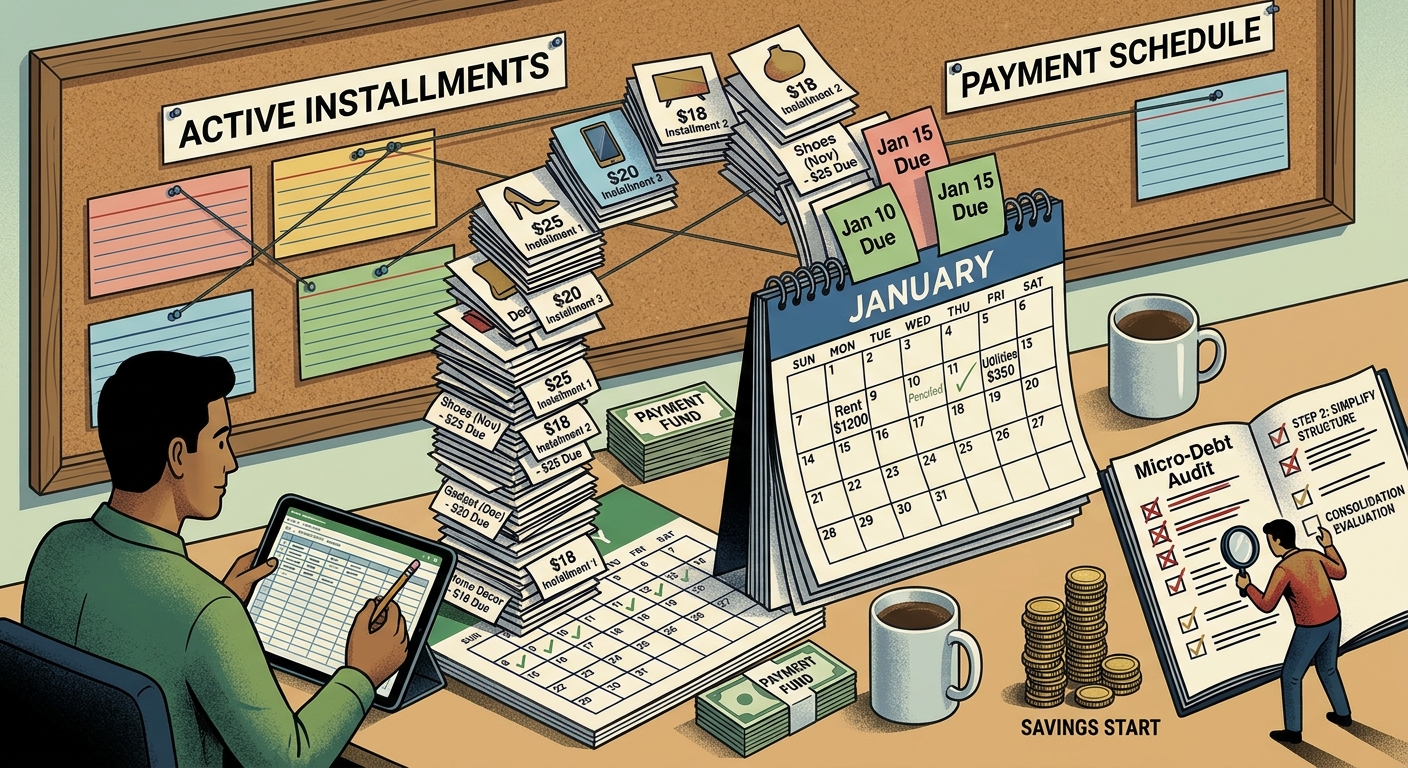
The modern shopping experience has been designed to make purchasing as seamless as possible. In the past, a purchase was a single event: you exchanged money for an item, and the transaction was complete. Today, however, that transaction can be the beginning of a long series of smaller payments. With a single tap, a purchase is divided into installments that feel manageable at the moment of sale.
But there is a downside to this convenience: reduced financial visibility. When your payments are spread across several different apps, each with its own repayment schedule and notification system, it becomes harder to see the complete picture. You aren't simply managing a budget; you're keeping track of numerous small financial obligations. This is the "fragmentation fog"—a situation where you know you're spending money, but may not fully understand the total amount you've committed to paying.
As these installments accumulate, they can place increasing pressure on your cash flow. What started as a series of $20 payments can quickly become a substantial drain on your bank account, with withdrawals occurring at different and sometimes unpredictable intervals. To regain control, you need to move from simply monitoring individual payments to actively organizing and managing all your obligations.
The Two-Step Recovery Plan: Audit and Align
To clear the confusion, you need a system that brings structure to your financial commitments. This involves two distinct steps: creating a complete inventory and evaluating ways to simplify your repayment arrangements.
Phase 1: The Complete Inventory
You cannot effectively manage what you haven't measured. Start by reviewing every Buy Now, Pay Later service you currently use or still owe money to.
- Create a Master List: Put everything into one document, spreadsheet, or notebook. Don't rely on checking individual apps whenever you need information. That makes it easier to overlook payments and important details.
- Record the Essential Details: For every active installment plan, record four things: the provider (such as Klarna, Affirm, or Afterpay), the remaining balance, the amount of the next payment, and its exact due date.
- Calculate Your Monthly Commitment: Once your list is complete, add together all the payments scheduled for each month. This gives you a much clearer picture of how much of your income is already committed before you account for other expenses.
Phase 2: Simplifying Your Repayment Structure
Once you understand your obligations, the next step is to consider how to make them easier to manage. Keeping track of twenty different payment dates can increase the risk of missed payments and unnecessary stress. The goal is to improve predictability and reduce complexity.
- Identify the Sources of Difficulty: Review your master list and identify what makes your payment schedule difficult to manage. Is it the frequency of payments, the number of different apps, or the overlap between due dates?
- Evaluate Consolidation Carefully: A personal loan may be worth considering in some circumstances if it can replace multiple BNPL balances with one structured repayment. However, compare interest rates, fees, loan terms, and the total repayment cost before making a decision. A new loan is not automatically cheaper or better than your existing arrangements.
- Restore Predictability: Whether you keep your existing installment plans or choose another repayment arrangement, aim for a schedule you can understand and manage. Knowing exactly how much will leave your account and when makes it easier to plan, save, and work toward your financial goals.
Summary
The Buy Now, Pay Later era has made spending more convenient, but it has also made money management more complicated. Feeling overwhelmed by multiple small payments is an understandable response to a financial landscape where obligations are scattered across different providers and schedules.
By creating a thorough inventory, you bring those less-visible obligations into focus. By evaluating your repayment options, you can work toward a more organized and manageable financial picture.
Remember, clarity is the foundation of control. Once you understand the full extent of your commitments, you can make more informed decisions about managing them.
Disclaimer: This article is provided for educational purposes only and does not constitute professional financial, legal, or tax advice. Please consult with a qualified professional regarding your specific financial situation.
Take the first step toward greater financial clarity. If credit-card debt is also part of your financial picture, explore CutTheCard's free payoff planning tools to compare repayment strategies and better understand your options.
Enjoyed this post? Never miss an update!