

Replacing Predatory Loans with a Structured Snowball Strategy
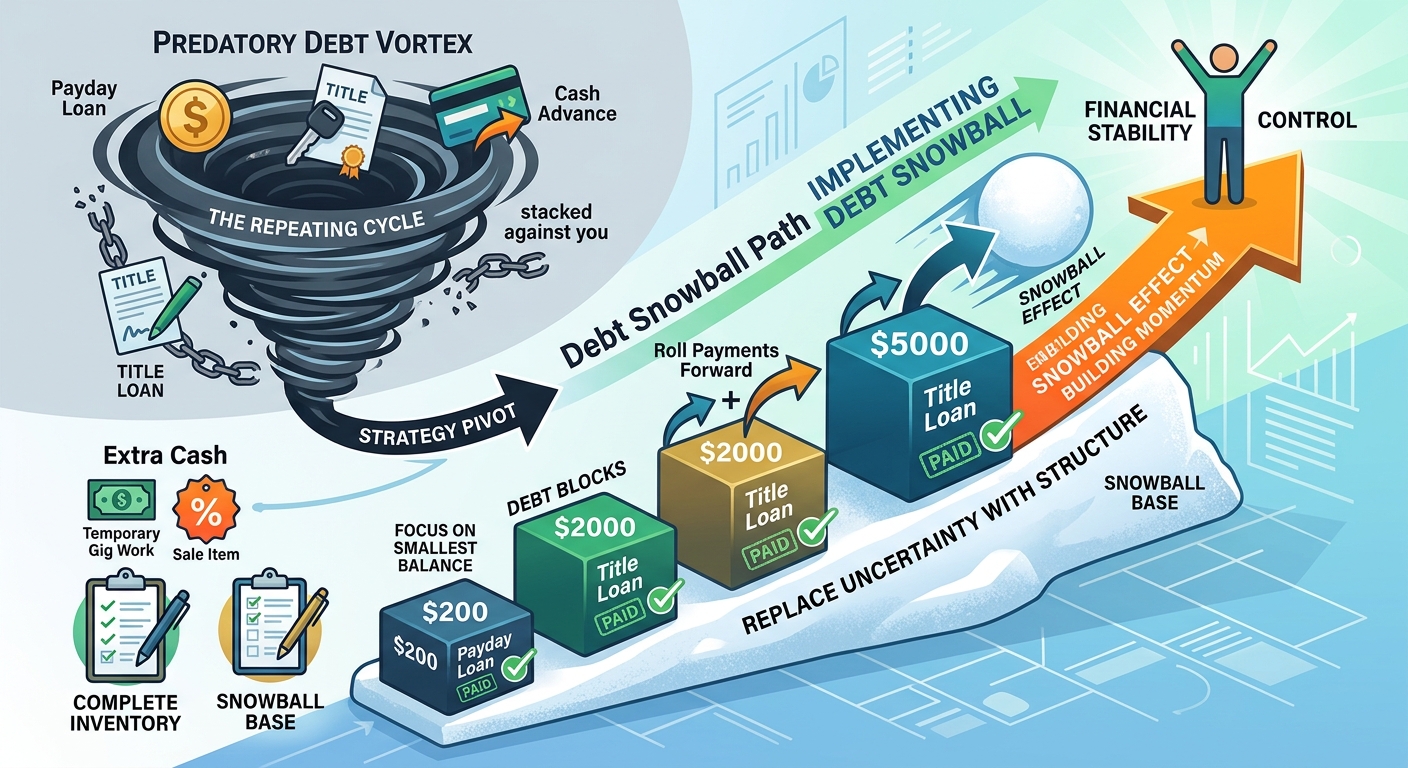
There is a specific kind of exhaustion that comes from playing a game where the rules seem stacked against you. It isn't simply the fatigue of hard work; it is the strain of being caught in a repeating cycle. For many people, that cycle involves high-cost borrowing—payday loans, title loans, or high-interest cash advances that initially seemed like a lifeline during a financial emergency but have become a persistent burden.
When you are managing several high-interest obligations at once, the numbers can feel overwhelming. Payments may seem to disappear into interest before making much progress on the principal. It can feel as though you are working hard just to stay in the same place. The pressure of approaching due dates can take away your sense of control and make it difficult to see a way forward.
Breaking this cycle takes more than simply trying harder. It requires a clear change in strategy. Rather than reacting to each payment deadline as it arrives, you can begin replacing the uncertainty of high-cost debt with the structure and consistency of a planned repayment approach.
Implementing the Debt Snowball
The Debt Snowball method is often recognized for its psychological benefits. When applied to multiple high-interest debts, it can provide a practical way to build confidence and maintain motivation.
The Snowball method focuses on paying off the smallest balances first, while making the required minimum payments on the remaining debts. By comparison, the Debt Avalanche method prioritizes the debts with the highest interest rates and can reduce the total interest paid. The right approach depends on your circumstances, but the Snowball method can be especially helpful when visible progress is important to keeping you motivated.
To move from financial uncertainty toward a more organized repayment plan, follow these steps:
1. Take a Complete Inventory
Start by committing to avoid taking on additional high-cost debt whenever possible. Then list every outstanding loan and debt separately. Include the current balance, interest rate, minimum payment, and due date. Arrange the list from the smallest balance to the largest.
Do not overlook smaller obligations. A $200 payday loan and a $2,000 title loan both belong on your list. Seeing the complete picture gives you a starting point and helps you plan your next steps.
2. Focus on the Smallest Balance
For the Snowball method, the first target is the debt with the smallest balance, not necessarily the highest interest rate. Continue making the required minimum payments on all your other debts. Then direct any additional money toward the smallest balance.
Look for realistic ways to free up extra cash. You might temporarily reduce subscriptions, sell items you no longer use, or take on occasional additional work. Even modest extra payments can help you reach that first payoff milestone sooner.
3. Roll Your Payments Forward
The real momentum begins when you eliminate your first debt. Once its balance reaches zero, don't treat the money you were paying toward it as extra spending money.
Instead, add that entire payment amount to what you were already paying toward the next-smallest debt. This increases the amount going toward your next target without requiring you to find an entirely new source of money.
4. Build Momentum as You Progress
Repeat the process each time a debt is paid off. The payment amount you can direct toward the remaining balances grows with every account you eliminate.
By the time you reach your largest debt, you may have built a considerably larger payment than you could have managed at the beginning. What started as a series of small steps becomes a more organized and increasingly powerful repayment plan.
Summary
Replacing high-cost borrowing with a structured Snowball strategy is about regaining a sense of control over your finances. Breaking a large debt burden into smaller, achievable goals can make the process feel more manageable and help you stay motivated.
Progress rarely happens overnight, but a consistent plan can make it easier to see how far you have come. Each debt you eliminate represents another step toward greater financial flexibility and stability. The Snowball may start small, but its momentum can grow with every balance you pay off.
Disclaimer: This article is provided for educational purposes only and does not constitute professional financial, legal, or tax advice. Please consult with a qualified professional regarding your specific financial situation.
If credit-card debt is also part of your financial picture, CutTheCard can help you understand your balances and compare potential payoff strategies. Explore the tools at CutTheCard to see how different repayment approaches may affect your timeline and interest costs.
Enjoyed this post? Never miss an update!