The Buy Now Pay Later (BNPL) Stacking Effect: How $20 Installments Wreck Your Monthly Budget
It starts with a simple, almost invisible decision. You are browsing online, perhaps picking up a new pair of shoes, a gadget, or a piece of home decor. The price tag looks manageable, but then you see it: the "Buy Now, Pay Later" option. Suddenly, that $100 purchase isn't a $100 hit to your bank account today; it's just four easy payments of $25. It feels like a win. It feels like you're stretching your money further.
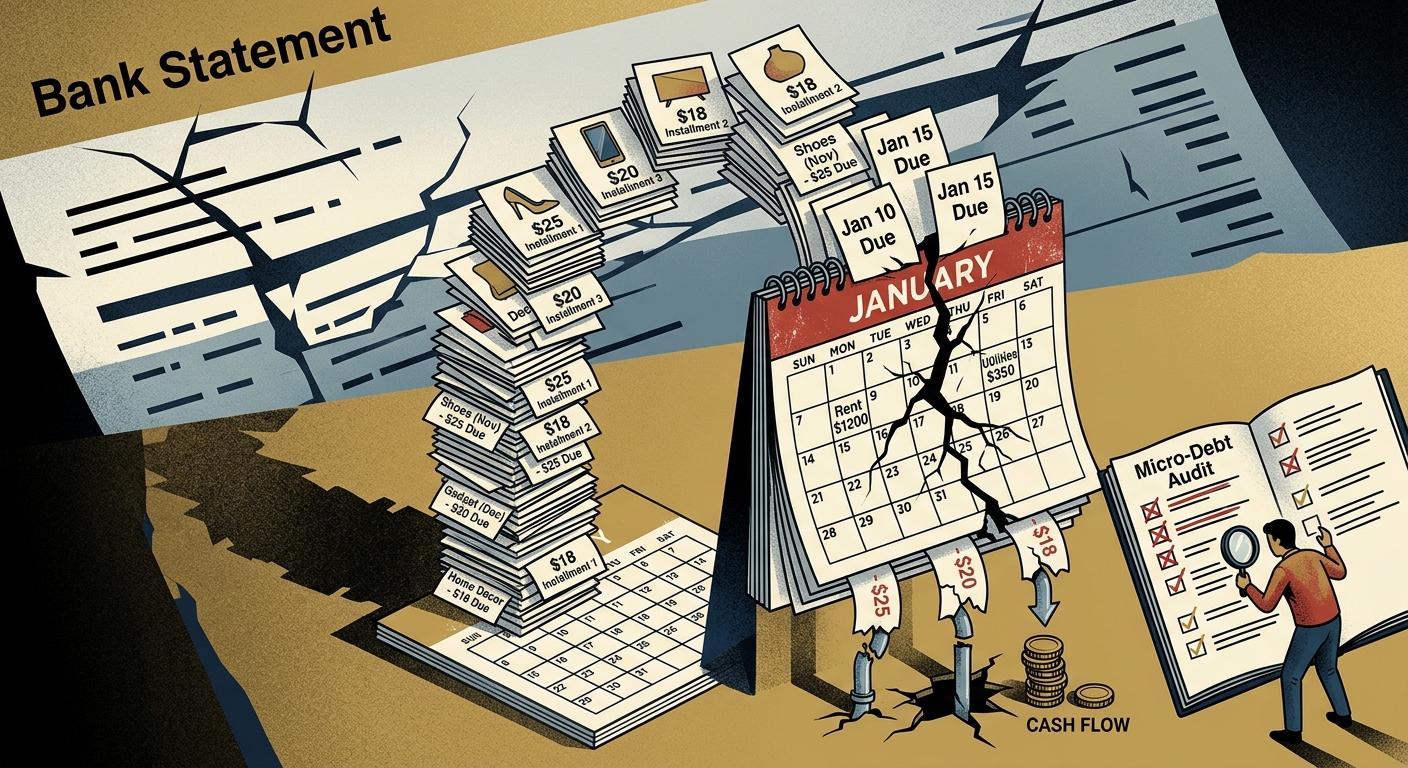
This is the psychological appeal of Buy Now, Pay Later (BNPL) services. They lower the barrier to spending, turning impulse purchases into seemingly manageable installments. During busy shopping periods, such as the holiday season, this effect can become even more pronounced. Instead of making one or two BNPL purchases, you may make dozens. Small obligations accumulate on top of one another, creating an invisible tower of future payments.
The problem isn't necessarily the individual $20 or $25 payment. It's the stacking effect. By the time January arrives, all those separate purchases can collide with your monthly cash flow. The installments that once seemed easy to manage may come due around the same time, creating an unexpected drain on your available money and disrupting even a carefully planned budget.
Understanding the Invisible Drain
The danger of BNPL isn't just the amount being spent. It's also how difficult it can become to keep track of your financial commitments. When spending is divided among many small payments, the connection between a purchase and its impact on your bank account can become less obvious.
The Fragmentation Trap
Traditional credit cards generally provide a statement showing your account balance and payment obligations in one place. BNPL services, however, can spread purchases across multiple platforms and repayment schedules. This fragmentation makes it harder to calculate your true monthly commitments.
You might look at your bank balance and think you have $500 left for the week, forgetting that $400 is already committed to a dozen different $30 installments scheduled over the next few days.
The Cash Flow Squeeze
BNPL can create unexpected changes in your available cash. Installments may be scheduled every two weeks or monthly, often on different dates. You might have plenty of money available at the beginning of the month, only to find much less available by the middle of the month as several payments overlap.
This can turn budgeting into a cycle of reacting to withdrawals rather than planning ahead.
The Psychological Erosion of Discipline
The convenience of BNPL can gradually weaken spending discipline. When a purchase feels inexpensive because it is divided into installments, it may be easier to spend more than you originally intended.
These small purchases accumulate. Over time, several easy decisions can become a substantial repayment obligation that feels much harder to manage than the original purchases did.
How to Reclaim Your Cash Flow
If your budget is being squeezed by multiple BNPL installments, the first step is to bring all those separate obligations together in one clear picture.
- Perform a Micro-Debt Audit: List every active BNPL purchase. Don't rely on memory or individual app notifications. Create one master list showing each payment amount, due date, and remaining balance.
- Identify Your Payment Schedule: Calculate how much money is being withdrawn from your bank account each week for BNPL payments. Understanding your weekly commitments is the first step toward managing them.
- Evaluate Your Options: If keeping track of multiple installments has become difficult, review your repayment options. A personal loan may be worth evaluating in some circumstances, but compare interest rates, fees, repayment terms, and the total amount you would pay before replacing existing balances with new borrowing. A new loan is not automatically a less expensive solution.
Summary
The Buy Now, Pay Later model can make spending feel easier by dividing purchases into smaller payments. While this may provide flexibility at the point of sale, multiple overlapping obligations can create a longer-term challenge for your monthly budget.
Recognizing the stacking effect is the first step toward addressing it. By bringing all your installment payments into one place and taking a structured approach to your finances, you can make better decisions about your available money and protect your financial stability.
Don't let small payments create bigger problems. Understand what you owe, when it's due, and how each commitment affects your monthly budget.
Disclaimer: This article is provided for educational purposes only and does not constitute professional financial, legal, or tax advice. Please consult with a qualified professional regarding your specific financial situation.
Take a clearer look at your debt and repayment options. If credit-card balances are part of your financial picture, explore CutTheCard's free payoff planning tools to compare strategies and better understand your path forward.
Enjoyed this post? Never miss an update!