Transitioning from BNPL Micro-Loans to a Single Payoff Plan
There is a deceptive lightness to the modern way we borrow. In the past, taking on debt was a heavy, deliberate act—a signature on a loan document, a significant impact on a monthly budget, and a single obligation to manage. Today, debt has been broken down into "micro-installments" that feel less like a loan and more like a minor subscription service. You aren't borrowing $500; you are simply making a few small, manageable payments.
But this perceived lightness can be a mathematical illusion. While each individual payment feels inconsequential, the combined weight of dozens of separate obligations can be significant. This is the "micro-loan trap": a state of fragmented debt where your cash flow is constantly affected by different due dates and service providers.
When these small obligations overlap, the resulting "stacking effect" can turn a manageable budget into a confusing series of unexpected withdrawals. Moving from fragmented payments to a more organized approach is not just about paying off balances; it requires shifting your perspective from individual payments to your overall financial picture.
The Structural Pivot: Moving from Micro to Macro
Moving from a collection of BNPL micro-loans to a single payoff plan is about regaining control of both your cash flow and your mental bandwidth. A successful transition involves three distinct stages.
Stage 1: Aggregating the Fragments
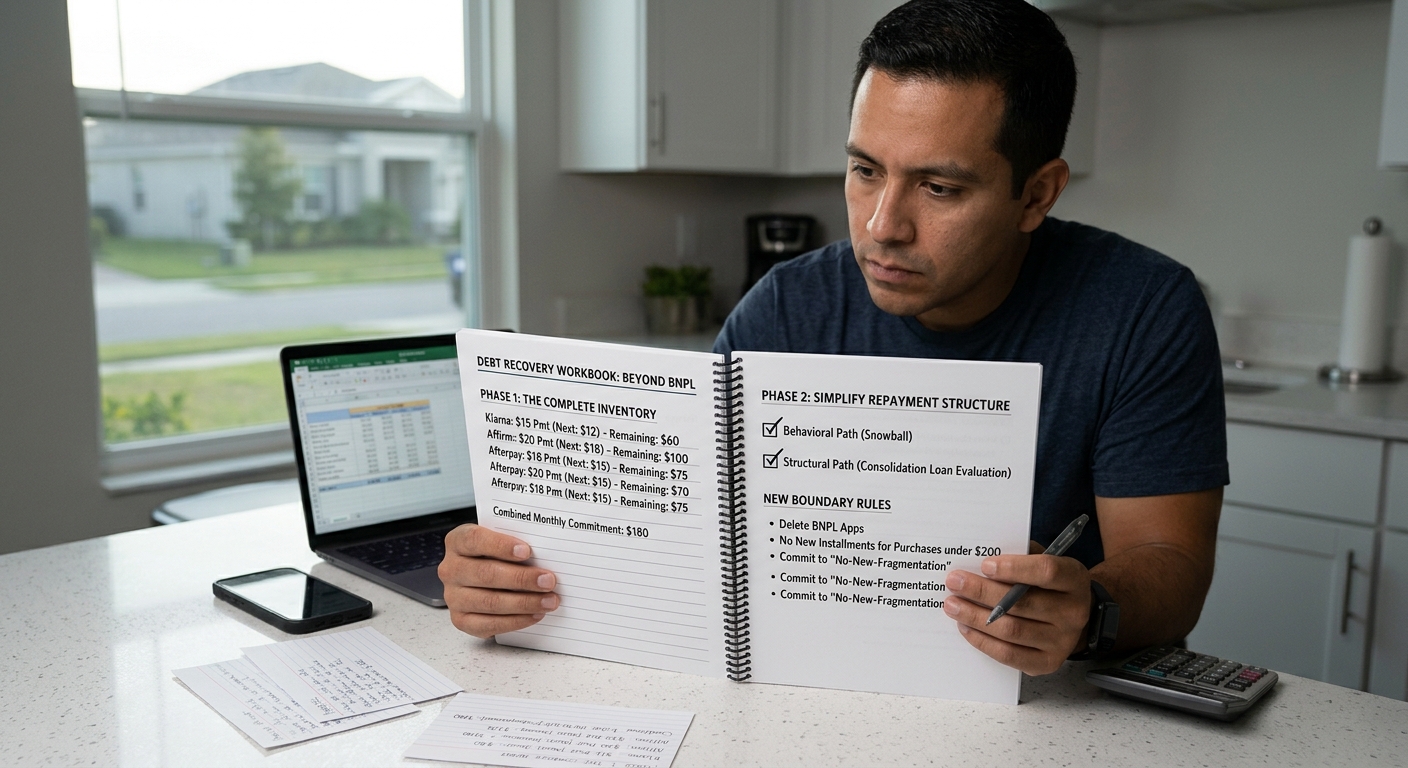
The first step is to stop viewing your debt as a series of isolated transactions and start seeing it as a combined financial obligation. Bring every active BNPL installment into one master overview. Calculate your total outstanding balance across all platforms and, just as importantly, identify the total amount leaving your account each month for these payments. Seeing the complete picture makes it possible to build a meaningful payoff strategy.
Stage 2: The Consolidation Choice
Once you understand the full scope of your obligations, consider which payoff approach makes the most sense for your circumstances. There are two primary paths:
- The Behavioral Path (The Snowball): If you prefer to tackle individual balances one at a time, you can use the snowball method by paying off the smallest balances first. This can provide early wins and build momentum as you work toward larger obligations.
- The Structural Path (The Consolidation Loan): If the biggest challenge is managing multiple providers and due dates, you might consider whether a single personal loan could simplify your finances. A consolidation loan may replace several BNPL payments with one scheduled monthly payment. However, compare interest rates, fees, repayment terms, and total borrowing costs carefully. A new loan is not automatically cheaper or a better option.
Stage 3: Enforcing the Boundary
The transition is only complete when you change your relationship with micro-payments. Once you have paid off or reorganized your BNPL obligations, establish clear boundaries to prevent the same situation from developing again. This could mean removing saved card information from BNPL apps, limiting new installment purchases, and committing to a "no-new-fragmentation" rule. The goal is to keep your obligations visible and manageable rather than returning to a pattern of scattered payments.
Summary
Moving from BNPL micro-loans to a single payoff plan is a shift from financial confusion toward greater organization. It is the process of bringing many small obligations into one clear financial picture.
By reviewing your total balances, choosing a payoff strategy, and setting new spending boundaries, you do more than work toward eliminating debt. You also reclaim the mental space previously occupied by keeping track of numerous payments and due dates. You move from reacting to fragmented financial obligations to taking a more proactive role in managing your money.
Disclaimer: This article is provided for educational purposes only and does not constitute professional financial, legal, or tax advice. Please consult with a qualified professional regarding your specific financial situation.
If credit-card debt is also part of your financial picture, explore CutTheCard to understand your balances, compare repayment strategies, and see how you can save money and time as you work toward paying off your debt.
Enjoyed this post? Never miss an update!